Marble floors look delicate, elegant, and so beautiful. But marble is exceptionally prone to stains. If you spill anything with a pigment on marble, the floor will stain quickly. A few drops of lemon juice are enough to disfigure your limestone floors completely. But, Dubai Rubber is here with its magical guide that gives a solution to every acidic stain-related problem. While restoring the marble after an acidic incident might be difficult, it’s not impossible.
Acidic Stains Removal From Marble | A Skilled Guide
First of all, you need to identify the stains — Etching or ordinary! Before going full nuclear on every suspected stain, identify it!
- Etching Stains: These stains are usually the result of dropping something acidic, like lemon juice, vinegar, cleaning liquids, or even tomato juice. While the acid in tomato juice is not as powerful as the others, the red pigment, along with a weak acid, can leave an unpleasant pinkish stain on your neat marble flooring. This is an even bigger concern for homeowners looking for quality flooring in Dubai, where marble is a popular choice for elegant interiors. The acid doesn’t simply pool on the surface. Instead, it can penetrate the marble and cause damage beneath the surface. That’s why the marble may appear dull, stained, and even rough at times.
- Normal Stains: These stains can be caused by almost anything and everything. Oil, juices, rust, and dirt. Just like acids, these things also stain. The difference? The surface just seems to be dirty and discolored, but not rough or dissolved.
The best way to know is by touch. Run your finger across the stain. If it feels smooth but the surface is dirty, then it’s normal staining. If the surface also feels rough, it’s etched.
Quick Action With First Aid For Dubai Homes.
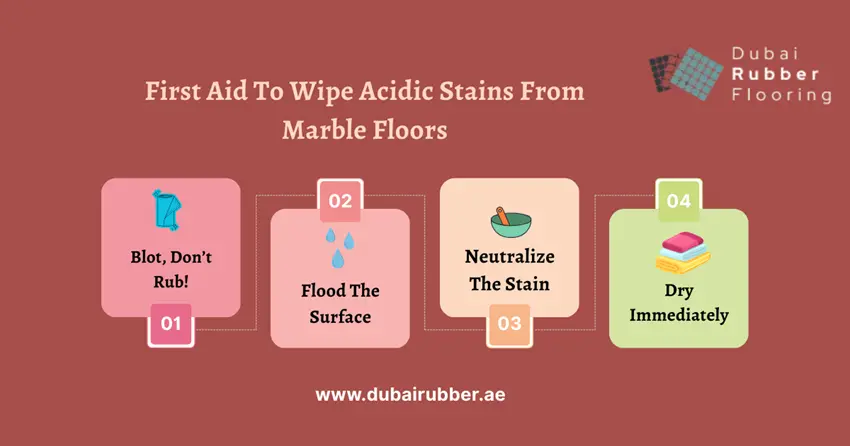
If you’re struck with an acid stain on your otherwise flawless marble, don’t wait. The longer you wait to clean the acid stains, the more you lose. Every second counts. Follow these steps to save your marble just in time.
- Blot Dry The Surface: As soon as the acid hits the surface, it comes into action. Don’t panic; instead, show presence of mind. Take any cloth nearby and place it over the acid and press it. Don’t rub! Always tap dry. The more you rub or wipe the surface, the more the acid spreads and damages the surface around the original stain as well.
- Layer a Cleaning Poultice: Make a thick paste of baking soda and water and apply it to the stain. This alkaline solution would neutralize the stain to a great extent and stop the marble from deteriorating. For stains that are not acidic, Oxydol and ammonia solution is enough.
- Rinse With Clean Water: There are two ways. Either flood the stained area with water, or drench a soft towel in clean water and rinse the area with it.
- Dry The Area: Now, dry the area with a soft microfiber cloth or a towel. Again, just pat dry, don’t wipe the cloth across the stained area. This may risk your floors.
Additional Protection:
Keep marble polish or a temporary sealant at home. In case of such events, apply a thin layer of polish or the sealant. It would prevent further damage until professional help arrives to restore the surface.
Pro Tip:
Keep a marble first-aid kit always ready at home. This would prepare you to tackle these problems before Dubai’s heat evaporates the acid and the stains become permanent.
Cleaning Pastes That Actually Work On Marble Floors!
Here are some home remedies to remove acid and other stains from a limestone floor. The ingredients for these cleaning solutions are easy to find in the daily kitchen.
- Baking Powder Poultice: Mix 3 spoonfuls of baking powder with a few drops of water. Slather the acid-stained area with the cleaning paste. This paste is highly alkaline and neutralizes the acid efficiently.
- Talcum & Water Poultice: Talcum powder is completely safe for highly sensitive polished marble surfaces. Make a thick paste with 5 spoonfuls of talc powder and one teaspoon of water, and apply it to the etched surface. It would help restore the surface to some extent.
- Commercial Marble Poultices: These are industrial-grade cleaners, including special absorbent powders and cleaners that are completely safe for marble. They restore the finish of the etched surface without posing any damage to the remaining area.
When DIY Won’t Do, Call A Professional
There are some cases where DIY fails miserably. That’s the time to let professionals handle this. There are some instances where you should just stop experimenting, such as:
- Deep etching, which means the harder you try, the worse it gets.
- Using incorrect pastes can cause the marble to dull even further.
- Larger stained surfaces are not restorable by DIY solutions.
If you face any of the above problems, it’s time to call experts, and they will handle it their way.
- They use diamond polishing machines that gently buff the etched surface.
- They use commercial poultices with extreme precision, so there’s no chance of damage.
- Experts assess the marble type, and then they treat it. No more one-size-fits-all.
Why Dubai’s Heat Makes It More Challenging?
Dubai has a very harsh climate all year round. This only hardens the problem to solve. Here are some of the factors that are caused by Dubai’s heat on acidic stain removal.
- Faster Drying
Due to the immense heat, any spilled liquid dries out faster than you think. The faster the acid dries out, the harder it is for you or any professional to restore the marble to its fullest. That’s why presence of mind is extremely important.
- Marble Expansion
The vicious cycle of cold interiors of Dubai due to the 24/7 running AC and the scorching outdoors can cause unstable expansion and contraction of marble. As time passes, the etched surface becomes even more visible, and now there’s a chance that the marble might even crack.
- Dust & Debris Incorporation
With the etched surface now exposed to almost everything, there’s a high chance that dust particles, dirt, or any other spilled stain would only make it worse. These particles would settle in deeper and pollute the original shine and beauty of the marble.
- Humidity + Acid = The Worst Combination
The areas that are closer to the coastline face even more trouble with the acid staining. You see, acid becomes even more aggressive in hot and humid climates. Even minor spills can ruin the marbles forever. The stains that are left are more defined, deeper, and stubborn in such areas.
Pro Tip: Have your marble floors polished and resealed twice a year. With good care, you can extend the time periods up to 8-10 months. Keep a DIY acid stain remover kit. It would come in handy. The components of this kit are discussed above in detail.
Polishing Tips By Seasoned Experts In The Field
The natural shine of marble can’t be restored using just one method. You have to get creative. What we have here is a meticulously curated step-by-step method to polish marble at home.
Step 1: Deep Cleanse
The surface is deep-cleaned before any polishing activity. This employs a pH marble cleaner to prevent further etching or any other staining.
Step 2: Soft Polishing Pads
Only the diamond polishing pads are used to gently buff out the surface. These pads remove the etching quite effortlessly and softly, as compared to other abrasive pads.
Step 3: Immediate Sealing
A flawless restoration requires immediate sealing. A strong and industrial-grade marble sealant is applied right after the polishing is completed.
Step 4: Precautions For High-Traffic Areas
After the floors are done, the high-traffic areas are inspected by the experts. Normally, it is recommended to have the high-trafficked floors restored every year for everlasting beauty.
A Keen Analysis!
Time to wrap it up. We discussed everything that is needed to pull out acid stains from delicate marble surface. The stains were classified and studied thoroughly. We came to know about the severity of both types of stains. After this, the first aid was discussed, and how to prevent marble from further deterioration. We also shared experts’ insights on how to polish this marble floor.