In simple words, yes, you can lay vinyl tiles or planks over concrete floors. In fact, vinyl flooring tiles is a great choice for concrete subfloors. But there are some things that you should know and consider beforehand. That’s why we have brought you a complete and thorough guide by Dubai Rubber, which covers everything about the process. This guide efficiently addresses the common query, “Can Vinyl flooring be installed over concrete? for the convenience of installers.
The Suitability Of Vinyl Over Concrete Floor — Query Among Homeowners!
Vinyl flooring is the ultimate choice as a floor to install over polished or unpolished concrete. But many homeowners are concerned about the durability and longevity of the combination. Their main question is, is vinyl the ultimate choice, or are there any better options? Vinyl flooring is closely related to stone and wooden flooring in the actual feel. This flooring is budget-friendly, easy to install, and even easier to maintain. Vinyl flooring is the ultimate champion for combining with concrete floors.
Exploring The Types Of Vinyl Flooring
Now, let’s discuss the diversity of designs, patterns, and shapes of vinyl flooring.
- Vinyl Sheets: No seams and a full rolled-out sheet of vinyl. These are the easiest type of vinyl flooring to install. Just roll out the sheet and cut the access.
- Vinyl Tiles: Small square tiles, used for creating patterns, like mosaics and checkerboards. A bit tricky to install, these tiles require precision and expertise.
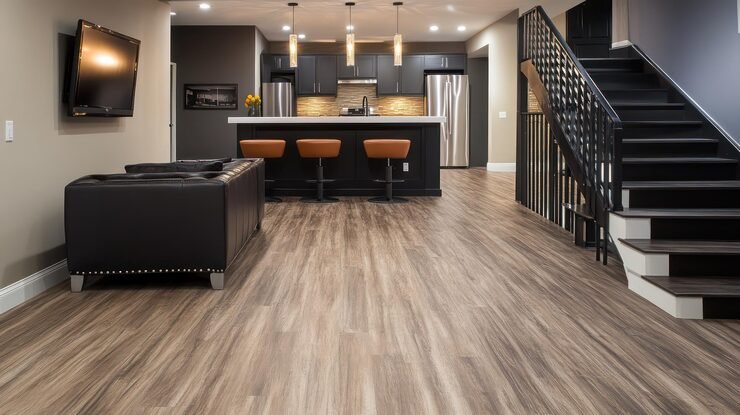
- Vinyl Planks: These planks mimic real wood texture and feel, like oak, walnut, or cherry. Vinyl planks are a bit harder to install as they require multiple measurements and high precision.
- Luxury Vinyl Tiles: If you want a feel of a real stone, without paying higher prices, these LVT tiles are the best.
These vinyl floorings are available in different stained wood colors, like brown, red, and hazel brown. Moreover, these represent the real patterns of wood, like oakwood, cherry, mahogany, and maple.
Factors To Consider Before Installing Vinyl On Concrete
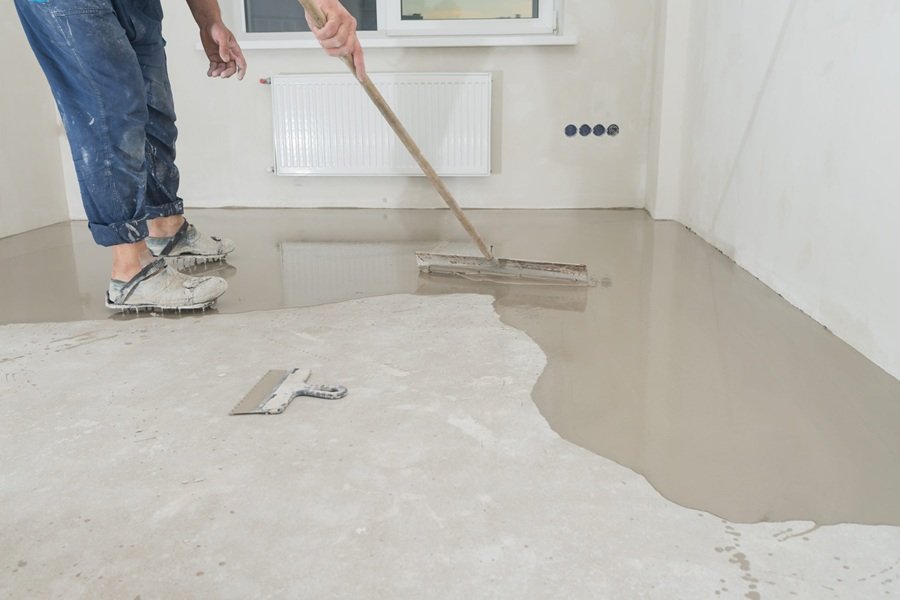
Before you go directly to the installation part, preparing the floor is critical.
Inspect The Concrete
Inspect the concrete for any imperfections, such as bumps and dips in the floor. Any imperfections like these would affect the finished look and vibe of your floor.
Repair Cracks
Check for any cracks in the floor. Minor cracks can be filled with a floor filler by yourself. Just be sure to fill the cracks all the way through and let those cure fully. Any major cracks need professional handling.
Test For Moisture
First, you need the concrete for moisture seepage, as concrete tends to be wet. For this, place a transparent composite sheet on the concrete floor. If the plastic sheet has any water on it, the moisture in the concrete floor would ruin the vinyl flooring.
Clean The Surface!
Apart from checking for moisture, it is crucial to check for other kinds of debris and trash. Sweep and vacuum the concrete floor thoroughly. Dust and grains can result in inefficient adhesive application.
Is Underlayment Necessary?
Underlayment is not essential but always beneficial. Waterproof underlayment can provide a moisture barrier between the concrete floor and the vinyl flooring. Moreover, underlayment can increase the longevity of the vinyl.
Lay Vinyl
Now, place the vinyl flooring (sheets, planks, or tiles) on the floor. Cut the access and seal the seams. This would provide you with a properly sealed floor.
Is Vinyl On Concrete Actually Possible?
Of course, vinyl can be laid on a concrete floor without a worry. A clean, dry, and perfectly leveled concrete floor is a must for a flawless vinyl flooring installation. A damp, cracked, and uneven concrete floor can make things go south.
When Does it Work Directly?
You can directly lay vinyl tiles, planks, or sheets on the concrete floors when the subfloor is completely dry, without any lingering dampness or moisture. The floor should be perfectly even without any bumps or dips, as it can affect the vinyl floor installation, and the finished flooring would look wonky.
A DIY Method To Install Vinyl Flooring On Concrete
Here is a clean and concise method of installing vinyl flooring in easy and simple steps.
- Inspect & Repair:Examine the concrete floor and repair any imperfections in the concrete floor to avoid any further complications.
- Thorough Sweeping: Clean the concrete surface with the help of a broom or a vacuum cleaner to eliminate any debris or dirt.
- Underlayment Installation: If you want extra cushioning, consider LVP underlayment over concrete. Install underlayment as per the exact size and dimensions of the room.
- Layout: It is a good practice to let the laminate sit in the room for at least 2 days. It would eliminate the expansion or contraction risk.
- Lay The Vinyl: Leave an expansion gap of a quarter of an inch on all sides while laying down the flooring.
- Secure Flooring: If sheets, then secure the edges, and in case of planks or tiles, join the seams together.
Discussing The Positive Attributes Of Vinyl On Concrete Floors
Now, let’s discuss the positive key points of installing vinyl flooring over concrete floors.
Durability And Longevity
Placement of LVP flooring over concrete would be a durable floor treatment. If the floor is prepared properly, this flooring can easily last up to 10-15 years or more. Scratches and scuff marks don’t affect the vinyl surface.
Moisture Resistance
Vinyl floorings are exceptionally water-resistant. Real wood warps and gets damaged easily, while vinyl doesn’t. The only thing essential for this is a perfectly sealed concrete floor. Its resilient surface is best for kitchens, bathrooms, and basements.
Easy To Maintain
These vinyl floors are surprisingly easy to maintain. Just a sweep and a dry mop are enough as far as daily cleaning goes. You can also use industrial cleaners, especially made for vinyl floors.
Easy Affordability
As compared to any other luxury flooring, vinyl is the most economical option. Not only this, but the installation of these LVT tiles is also quite easy, sometimes so easy that you can install them by yourself.
Vast Design And Color Palette
Vinyl flooring has so much to offer. Vinyl sheets have rustic and beautiful patterns all over them. Luxury vinyl tiles can mimic the feel of actual stone or ceramics to provide an earthy charm. While vinyl planks can be bookmatched to represent a big, patterned picture.
Common Pitfalls Of Vinyl On Concrete Flooring
A thing can’t have just benefits, and that’s the same with vinyl. There are some minor disadvantages of this vinyl flooring. But these advantages still have enough leverage to fizzle out the cons.
Customization Limitation
Vinyl is a generic flooring and comes in limited colors and patterns. See it like this: vinyl mimics wood, and stone, and wood and stone have limited custom options. Vinyl flooring reflects only the feel and pattern of the real thing (wood and stone).
Uneasy Underfoot
Vinyl tiles are hard, while LVT is rather soft. You can break in the hardness of vinyl tiles with the use of an underlayment. This provides an additional cushioning layer for a softer underfoot.
Subpar Adherence
If the concrete is damp or not cleaned properly, the vinyl floor won’t adhere properly. Over time, the vinyl floor can buckle or lose its place. This can be effectively avoided by cleaning and drying the concrete floor before vinyl installation.
The Takeaway — Key Points For Homeowners!
Vinyl and concrete can be friends, only if the concrete is prepared well. The concrete acts as the subfloor. That’s why concrete should be prepared as such. It should be completely dry and free from any dirt or debris for a smooth application of adhesive, and then the vinyl floor on concrete. If these criteria are met, then vinyl would look absolutely breathtaking and exceptionally strong on concrete floors. Otherwise, you’d have to repair these floors more often.